Components & Interfaces Impacting Photon-to Fuel Metrics
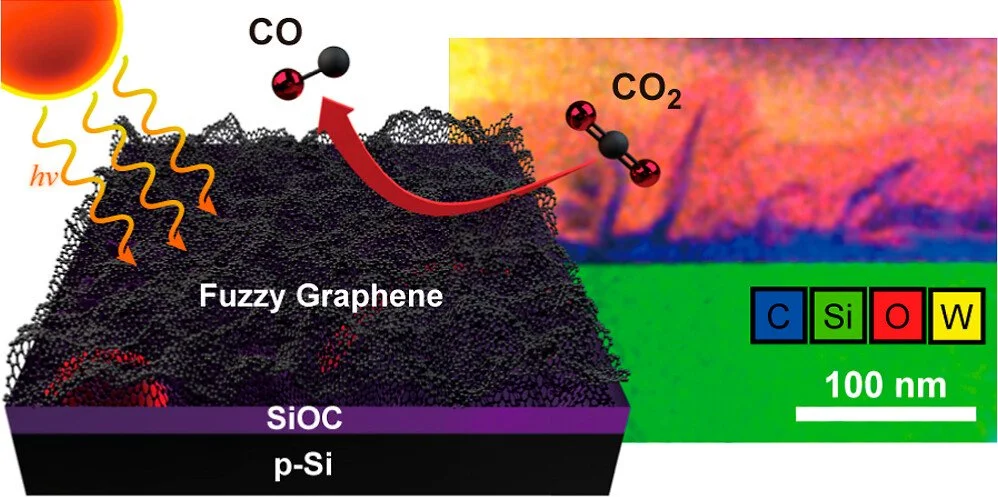
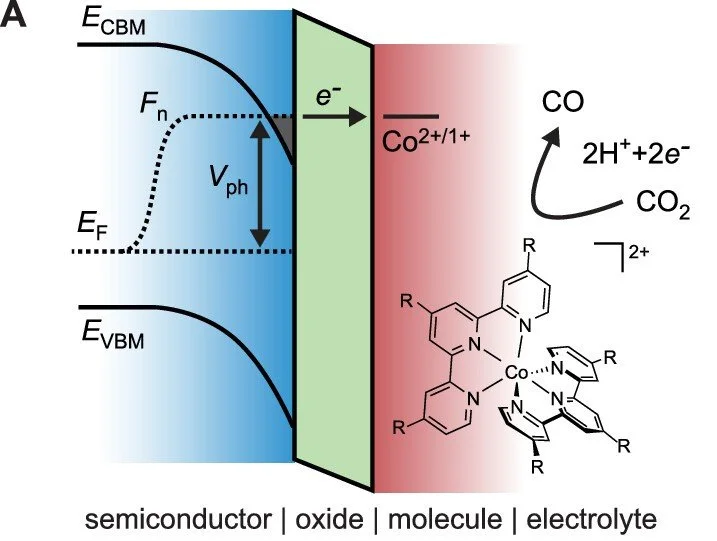
Hybrid Photoelectrodes combine molecular catalysts with light absorbing semiconductors. These integrations involve a series of finely tuned interfaces to achieve target photoelectrode performance. Understanding the impact of the individual components and resulting interfaces on global performance metrics and elucidating the mechanisms that control them, is the key work of this thrust.
To develop high performing hybrid photoelectrodes with tailored interfaces CHASE is
Tuning semiconductor light absorber morphology to enhance electrode performance and control product formation
Developing advanced semiconductor coatings and investigating how they impact electron transfer from semiconductors to catalysts, passivate defects on semiconductor surfaces, and increase electrode stability.
Exploring how overlayers and novel electrolyte compositions can tune electrode performance.
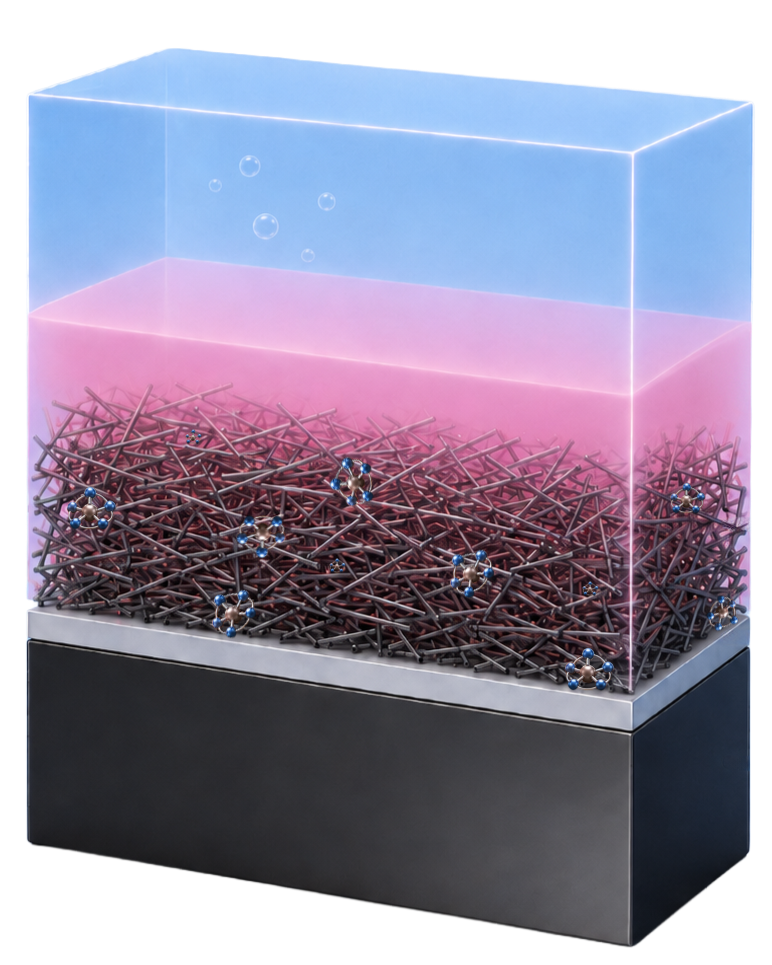
Investigating how catalyst coverage and assembly can control reaction efficiency and product formation beyond what is expected for a free or isolated catalyst.
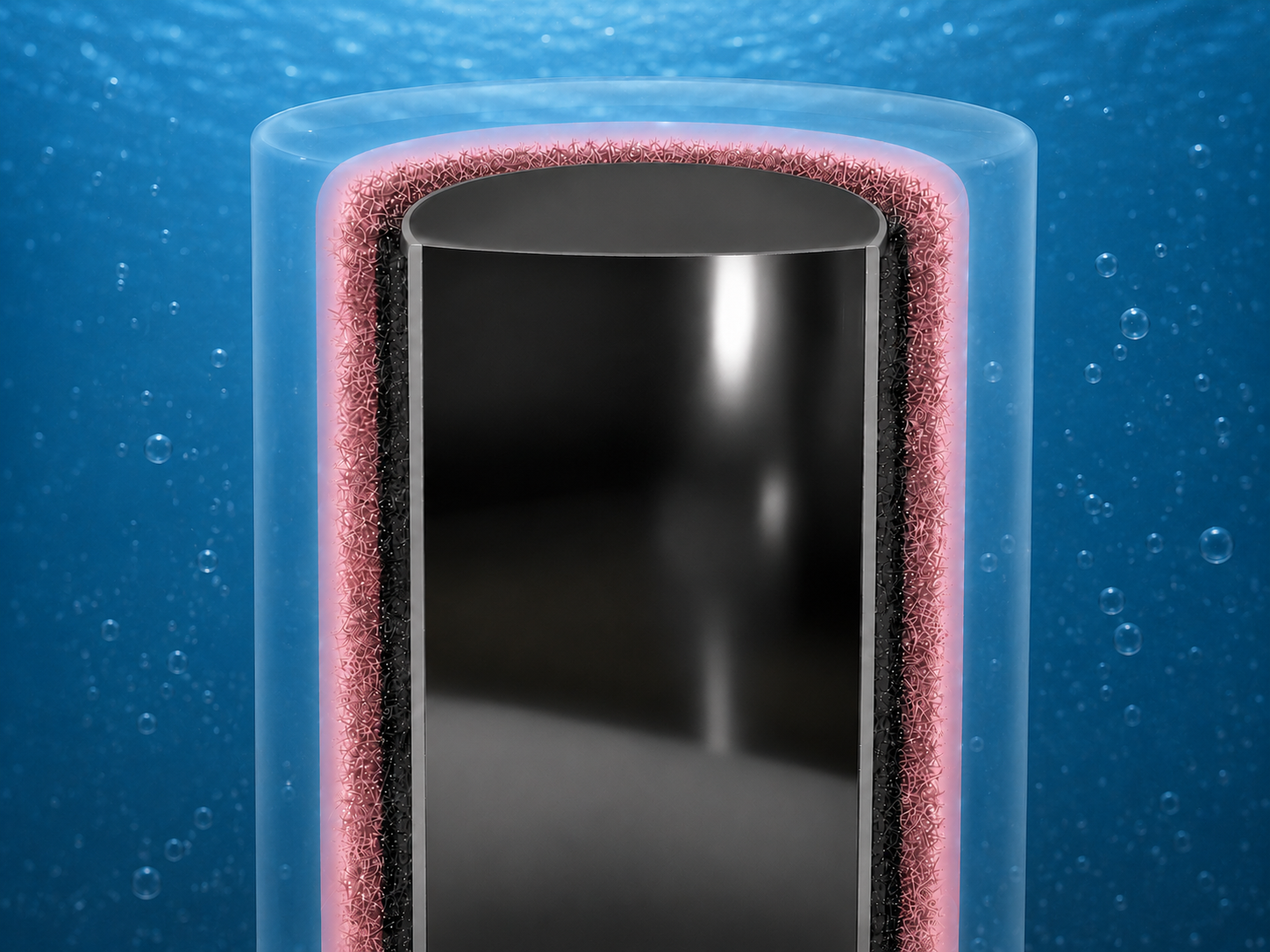
Silicon electrode coated with a passivation layer, catalyst layer, and overlayer, in an electrolyte solution.



Thrust Coordinator (early career research) - Devon Lemikuhl