

Welcome to the
Center for Hybrid Approaches in
Solar Energy to Liquid Fuels
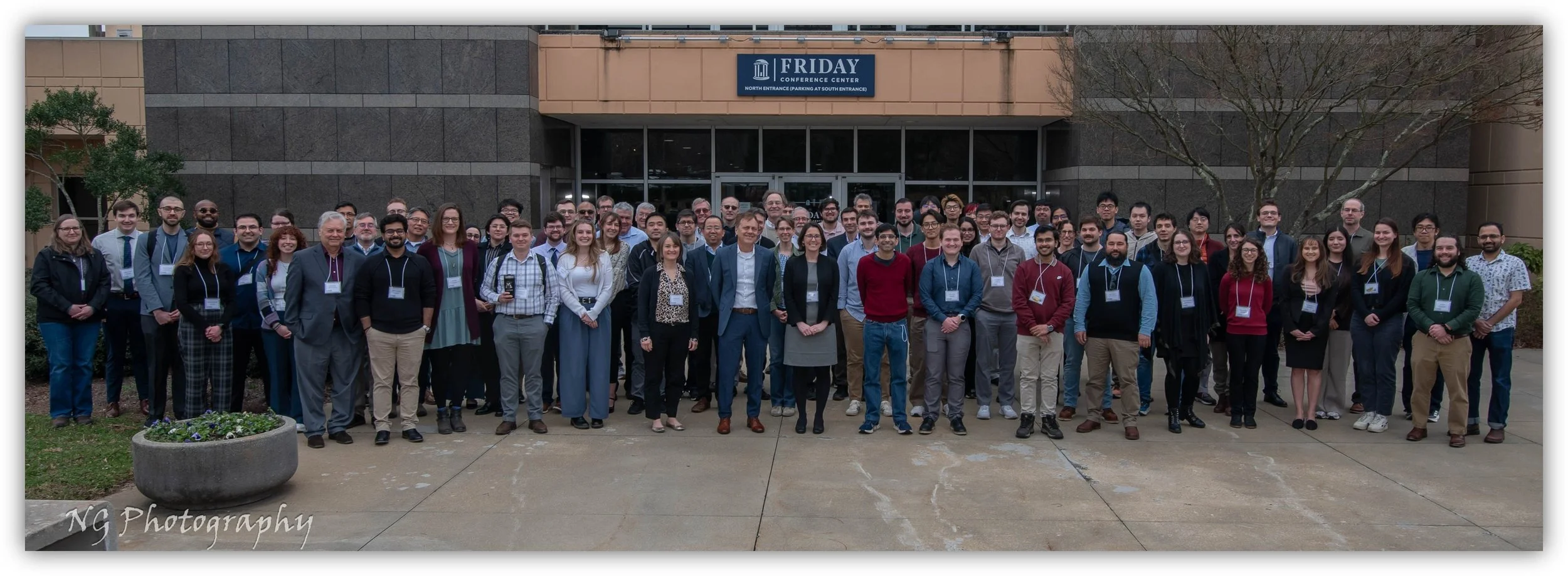
Our mission is to advance hybrid photoelectrodes for the photon-driven generation of liquid fuels from CO₂ and water
CHASE is developing advanced hybrid photoelectrodes which combine light-absorbing semiconductors with highly specific molecular catalysts to convert abundant feedstocks, such as light, carbon dioxide, and water, into liquid fuels. The complex transformations that take carbon dioxide into valuable liquid fuels require specifically designed light-absorbing materials that interface with catalysts that facilitate the bond-making and bond-breaking steps that convert feedstocks to fuels. CHASE seeks to deeply understand light-to-fuel conversion at every level, and to continue to push the bounds of what our hybrid photoelectrodes can achieve.
CHASE research is enabled by interdisciplinary collaboration across our scientific team, which spans multiple sites including The University of North Carolina at Chapel Hill, Yale University, The University of Pennsylvania, Princeton University, North Carolina State University, and Brookhaven National Lab. Through our cutting-edge research, CHASE is a global leader in the solar fuels field.
CHASE was initiated in 2020 by U.S. Department of Energy Office of Science, Office of Basic Energy Sciences. In September 2025, the second Phase of the Center began, and emphasizes its research efforts on liquid fuels and chemicals from the abundant feedstocks found in air.

Please check out our Research Page and CHASE publications to learn more about our work!
If you have any questions, please see our Contact page!

“The biggest barrier is to couple the light harvesting component of photosynthesis with the chemical fuel production component. Both of those individually will be challenging research targets, but finding a way to integrate the science of light harvesting and solar energy capture with the fuel production chemistry is really our major challenge.” -
Director Jillian Dempsey
